 Nov
NovAllocation, currency and exit come first
Diversify capital with Asian real estate
Quick — 10-second read
- In short
- Asian property can add geographic and currency diversification, but a single overseas asset is still a concentrated and relatively illiquid position.
- Who it matters to
- For investors treating property as one component of a broader portfolio rather than a single-market bet.
- Next step
- Assess the property’s share of your net worth, income and cost currencies, liquidity and overlap with assets you already own.
This is a guide, not legal, tax or investment advice.
Compare current project options
Prices are starting-market indications; confirm the final unit, availability and payment plan before a decision.
 Thailand
Plus Condo 1
 Thailand
Lumpini Place Srinakarin–Huamak Station
 Thailand
Niche Mono Ratchavipha
A foreign address does not automatically diversify a portfolio. The asset needs a distinct demand engine or jurisdiction without consuming the liquidity required elsewhere.
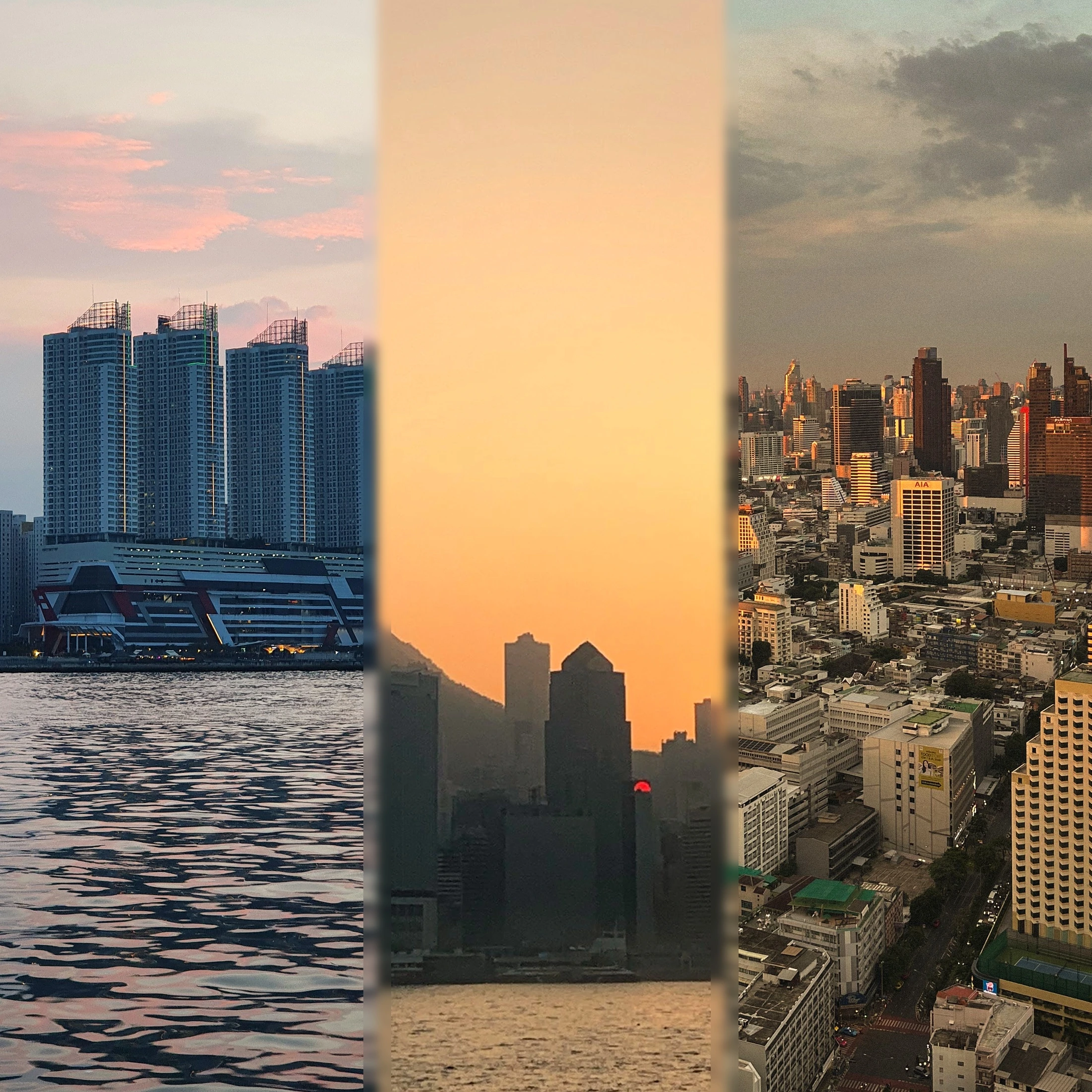
What matters before choosing a country
- A foreign country does not diversify a portfolio where the currency, demand engine, operator and asset class remain the same.
- Cap the total property allocation, including future instalments, before selecting a jurisdiction or project.
- Track acquisition, income, operating and sale currency, then review results in the household's base currency.
- Two identical units in one tower are one concentrated exposure despite separate contracts.
- Property is not an emergency reserve; exit may take months and require a discount.
- Tenure, liquidity and banking observations must be refreshed for the actual asset and are not personal investment advice.
Size the position before naming the country
These bands are a concentration lens, not personal advice. Income stability, debt, age, tax residence and existing real estate can change the appropriate position materially.
0–5%
5–15%
15–25%
Above 25%
Base currency
Asset currency
Demand engine
Jurisdiction
Where to start
A second home in a second country can still be the same risk twice. If the household, business and both properties depend on tourism or overseas investor demand, the map looks diversified while the cash flows remain correlated.
A useful position changes at least one variable: currency, tenant engine, legal system or market cycle. That benefit is purchased with due-diligence cost, slower liquidity, remote governance and cross-border reporting.
The practical fear is usually more direct: am I moving capital abroad, or simply building a larger property concentration? Answering it requires a household balance sheet that includes the main home, business interests, debt, securities, deposits, future education or retirement spending and the currency in which those obligations will be paid.
Foreign property can create a separate asset base, but it can also introduce a new dependency. A project with future instalments, one compulsory operator and an exit aimed only at the next international buyer may reduce flexibility even though it adds a new flag to the portfolio.
Position size matters more in property because the asset cannot be sold in fractions or reallocated quickly. A perfectly respectable unit may still be unsuitable if it consumes the emergency reserve or forces the family to accept whatever price is available during an early sale.
The sensible answer may therefore be a smaller completed unit, a different currency, or no purchase until the portfolio can absorb a long hold. Country selection follows the role of the asset, not the other way around.
This is a framework rather than personal investment, legal or tax advice. Tenure, banking, tax, operating permission and resale conditions must be refreshed for the actual asset and transaction date.
Why use Asian property for diversification at all?
Diversification is not a collection of passport stamps. Its purpose is to reduce the number of household outcomes controlled by one event. When income, the family home, business equity and savings all sit inside one economy, a change in currency, regulation or demand can affect them together. A property elsewhere can break part of that link only where its legal and cash-flow structure is genuinely distinct.
Currency diversification is also broader than the currency printed on the price list. A Cambodian condo may be quoted in USD while rent, common costs and resale demand still reflect the domestic economy. THB, VND, IDR, MYR and PHP affect the spending power of tenants and future buyers as well as the owner's translated return.
Jurisdictional diversification places an asset under a different registry, tax system, banking practice and enforcement environment. That can be useful, but unfamiliar tenure and capital controls are not automatically safer than home-country risk. The new jurisdiction needs to be understood well enough to remain an asset rather than an unresolved legal file.
Property behaves differently from a bank balance or listed security. It is tangible, location-bound and capable of serving real residential or commercial demand. It is also slow to sell, expensive to transfer and dependent on maintenance, management and local records. For that reason it can be a durable long-term position, but it should not be asked to perform the job of immediate liquidity.
Tangibility can encourage over-allocation. A buyer can visit the unit, stay in it and imagine passing it to children, which makes the commitment feel safer than a line on a statement. A useful counter-question is: what remains liquid if the property produces no growth for five years and takes twelve months to sell?
Good diversification is usually operationally plain. The position is capped, the tenure is lawful, the bank trail is auditable and the likely exit buyer is identifiable. Without those basics, distance changes the address more than the risk.
Fourteen portfolio questions
1. What share becomes illiquid?
Use total price, future instalments, transaction cost, furnishing and reserve. Include existing homes. Geographic variety does not cure concentration in one asset class.
2. Which currencies drive the outcome?
Map acquisition, rent, common charges, tax and sale. Report local- and base-currency results rather than hiding FX inside one final percentage.
3. What if capital is needed early?
Estimate marketing time, discount, agency, tax, assignment limits and developer competition. Keep a separate liquid reserve.
4. Which legal interest is entering the portfolio?
Condo freehold, finite foreign tenure, leasehold, Hak Pakai and an off-plan contract provide different control and depreciation profiles.
5. Who operates and reports?
Define the manager, bank path, statement, repair authority and tax file. Permanent dependence on the sales firm is a portfolio weakness.
6. Does the asset repeat the household's income risk?
Where employment, business equity and the property all rely on tourism, construction or one region, a single downturn can affect several balance-sheet lines.
7. What future capital is still callable?
List every instalment, completion payment, fit-out, launch cost and contingency. Size the position by the maximum commitment, not the reservation deposit.
8. Can seller, payee and title holder be reconciled?
Different entities may be legitimate, but their authority and relationship must be documented for title, banking and eventual repatriation.
9. How will the asset enter family and tax records?
Review local tax, home-country reporting, foreign accounts, marital property and inheritance before closing.
10. Is there demand beyond the sales narrative?
Collect achieved rents, building vacancy, completed resales and competing supply. Future infrastructure is a scenario, not current demand.
11. Can the operator be replaced?
The owner should retain data, keys, bank visibility and a practical right to appoint another manager. One group controlling sale, rent and resale is a concentration.
12. What happens on death or incapacity?
Maintain an accessible document file, local counsel contact and a clear transfer process. Complexity should not leave the family unable to act.
13. Combine four downside assumptions
Reduce rent, weaken FX, add a repair and extend the sale period. Risks often arrive together rather than in a convenient sequence.
14. Write the no-buy condition
Examples include unverified title, insufficient reserve, an excessive property allocation or an exit dependent solely on foreign buyers.
Allocate by country, currency and asset type
Allocate by risk source rather than by unit count. Two apartments in one tower share the developer, building governance, common charges, manager and resale queue. Separate door numbers do not create separate portfolio positions.
The first layer is legal interest. Condo freehold within quota, finite foreign ownership, leasehold, Hak Pakai and an off-plan contract offer different control, transferability and decay. They cannot be compared through price per square metre alone.
The second layer is currency. Keep four lines for each deal: acquisition, income, operating cost and sale currency. The objective is not to forecast exchange rates but to prevent one movement from determining every outcome. Review the model in local currency and in the household's base currency.
The third layer is asset type. Residential property often has a wider user base but still depends on the district and building. Commercial property may provide a longer lease but can be concentrated in one tenant and permitted use. Land and villas introduce title, infrastructure and lawful-ownership questions. Variety helps only when the end user and exit market are clear.
The final decision is how much of total capital should be property at all. The allocation bands are a concentration lens, not a target. Existing homes, income stability, debt and near-term family spending can justify a materially smaller overseas position. Include every future instalment, fit-out cost, tax and downside reserve.
A concise investment record should be possible: this asset represents X% of net capital, adds this currency and demand engine, and is expected to exit to this buyer group over this period. If the sentence depends on several unverified promises, reduce the cheque until the evidence improves.
Currency and jurisdiction exposures
Choose a market
Tap a country to open its profile
Cambodia
Use as a contained USD-oriented position after title and exit diligence.
Thailand
Use market depth selectively; do not transfer the country's reputation to every unit.
Vietnam
A long-horizon domestic-growth exposure with finite-tenure and entry-price discipline.
Indonesia / Bali
Treat as a limited operating position with strong legal and management control.
Malaysia
Use the documented framework, but prevent foreign thresholds from forcing an oversized position.
Philippines
Prefer completed evidence in durable CBDs over a broad national recovery thesis.
Cambodia
- Currency
- prices and many payments in USD; KHR also circulates
- Foreign rights
- eligible strata unit above ground floor, within 70% private-area cap; no land
- Liquidity
- low–mid
- Risk
- title, project and exit
Thailand
- Currency
- THB
- Foreign rights
- condo freehold within 49%; land restricted
- Liquidity
- mid–high, segment-specific
- Risk
- FX, quota and supply divergence
Vietnam
- Currency
- VND
- Foreign rights
- up to 30% of apartments in a building; generally up to 50 years
- Liquidity
- mid
- Risk
- tenure, quota and affordability
Indonesia / Bali
- Currency
- IDR; tourism models often presented in USD
- Foreign rights
- leasehold / Hak Pakai; no foreign land freehold
- Liquidity
- low–mid
- Risk
- term, licensing and operator
Malaysia
- Currency
- MYR
- Foreign rights
- freehold/leasehold subject to state consent and thresholds
- Liquidity
- mid
- Risk
- overhang and approval
Philippines
- Currency
- PHP
- Foreign rights
- condo within 40% foreign ceiling; no land
- Liquidity
- mid in stronger CBDs, lower in inventory-heavy areas
- Risk
- red — vacancy, weather and location
Notes by market
Cambodia
Use as a contained USD-oriented position after title and exit diligence.
A relatively accessible USD-oriented urban condo exposure. The portfolio benefit is a smaller dollar ticket; the trade-off is thinner resale evidence, uneven project execution and the need to verify the route to strata title. Its role is usually affordable access to a separate jurisdiction rather than high liquidity. The case is stronger where the unit is completed, the title route is documented and resale demand is not limited to the next international investor.
Thailand
Use market depth selectively; do not transfer the country's reputation to every unit.
A deeper ecosystem with THB exposure. Foreign freehold depends on the building's 49% quota and the inbound-funds file. Market depth does not make every resort or suburban unit liquid. Thailand can provide mature management and broader buyer depth where the specific district and building are proven. The central risk is treating Bangkok, Pattaya, Phuket and mass suburban stock as one market.
Vietnam
A long-horizon domestic-growth exposure with finite-tenure and entry-price discipline.
VND exposure to urbanisation and manufacturing, with generally finite and quota-limited foreign housing rights. Strong city momentum can reduce the valuation margin for error. The portfolio role is a link to domestic urban growth rather than a promise of quick resale. Project eligibility, tenure, banking and the next buyer's affordability need to be tested before the position is sized.
Indonesia / Bali
Treat as a limited operating position with strong legal and management control.
A tourism-led operating position rather than passive foreign freehold. Leasehold value declines with remaining term, while zoning, licensing and management control income. In portfolio terms Bali behaves more like a small hospitality business than a liquid residential reserve. The allocation should be lower where one operator, nightly rentals and renewal assumptions carry most of the value.
Malaysia
Use the documented framework, but prevent foreign thresholds from forcing an oversized position.
MYR exposure within a more documented legal and banking environment. State thresholds can force a larger single position, weakening diversification for a smaller portfolio. Malaysia can play a steadier-jurisdiction role where the city and project are not burdened by persistent overhang. Better documentation does not by itself create resale demand. Size should be set before the state and scheme are chosen.
Philippines
Prefer completed evidence in durable CBDs over a broad national recovery thesis.
PHP exposure linked to BPO, domestic demand and OFW capital. Foreign condominium ownership is capped while land is unavailable. District selection in Manila matters because vacancy and new supply are uneven. The market can add an English-speaking urban-demand exposure where the building has genuine occupancy and a local resale audience. Inventory-heavy submarkets should not be treated as a liquid portfolio allocation.
The portfolio role of each market
These six markets do not sit on one ladder from safe to risky. Each can solve a different portfolio problem, and none consistently combines low entry cost, deep liquidity, simple foreign tenure and strong income. The role should be named together with the trade-off.
Cambodia is commonly used for a smaller USD-oriented urban condo position. Its role can be affordable access to a separate jurisdiction without committing a very large share of capital. The trade-off is thin resale evidence, uneven execution and the need to confirm the route to strata title. It works better as a contained, document-led position than as a broad bet on cheap Asian property.
Thailand offers a deeper management and resale ecosystem in stronger locations. It can provide more market depth, but the owner accepts THB exposure, building-level foreign quota and significant differences between Bangkok, Pattaya, Phuket and other segments. The building and buyer pool matter more than the country's reputation.
Vietnam adds VND exposure and a link to urbanisation and industrial growth. It may serve a long-horizon growth role, but foreign housing tenure is generally finite and quota-limited, while strong momentum can already be reflected in price. The position requires close attention to eligibility, bank payments and the next buyer's affordability.
Indonesia and Bali are primarily operating and tourism exposures. A villa may diversify the demand engine, but leasehold decay, zoning, licensing and manager dependence make it a poor substitute for passive liquidity. Its plausible role is a limited hospitality-business position with strong local control.
Malaysia brings MYR exposure and a more documented legal and banking environment. It can play a steadier-jurisdiction role, although state thresholds may force a larger purchase than a smaller portfolio should carry. Mature documentation does not remove project overhang or weak resale.
The Philippines provides PHP exposure linked to BPO, domestic consumption and OFW capital. Established CBD demand can support a city-income role, but Manila submarkets vary sharply and excess inventory can dominate resale. Completed building evidence matters more than a national recovery narrative.
When the position stops diversifying
Tick anything the seller or operator actually does. The more ticks, the more you should slow down.
Diversification in name only
Often heard‘A different country automatically diversifies me’
Often heard‘USD pricing removes FX risk’
Often heard‘Property can replace the emergency reserve’
Often heard‘Two cheap units always diversify better’
Often heard‘More jurisdictions always mean more safety’
Often heard‘Completed property has no developer risk’
Often heard‘High rent compensates for a weak exit’
Often heard‘One excellent manager diversifies several units’
Often heard‘Personal use makes liquidity irrelevant’
A practical portfolio vocabulary
From thesis to monitored position
Write the portfolio role
Income, currency exposure, personal use or protection against a specific risk.
Cap the allocation
Fix total cost, future calls and liquidity before selecting a scheme.
Choose currency and legal interest
Compare jurisdictions through cash flows, tenure, exit and operating burden.
Monitor the position
Keep title, value, income, costs, tax and exit plan in the portfolio record.
Concentration risks to avoid repeating in Asia
The most common diversification failure is owning several assets that break for the same reason. Two units under one developer, one rental pool and one money route are separate properties on paper but a single counterparty exposure in practice.
Tower concentration is easy to overlook. Identical layouts compete for the same tenant and buyer, a building assessment affects every unit, and a title or governance problem spreads across the scheme. Different floors do not solve this; distinct demand, buildings or operators are required.
Currency concentration can also cross borders. A USD-denominated contract may still be supported by local rents, domestic operating costs and local purchasing power. The portfolio should show how much capital responds to USD, THB, VND, IDR, MYR and PHP rather than classifying exposure only by the sales invoice.
Exit liquidity is often discovered too late. A property can rent adequately and still take a long time to sell because of quota, remaining lease term, developer inventory or limited mortgage access for the next buyer. Income should therefore be reviewed with the full owner-cash method in the guide to rental-yield property in Asia.
Political and regulatory risk is not a call to predict headlines. It is a reason to keep the position small enough to survive a change in tax, banking practice, short-stay rules or foreign tenure. Complex rights and narrow buyer pools justify lower concentration.
Run two combined tests before purchase. First, reduce rent, weaken the currency and replace the operator at the same time. Second, assume the family needs the capital two years earlier than planned. If both answers rely on a quick sale to another overseas buyer, the portfolio is not yet resilient. The practical sale file is covered in how a foreign owner sells property in Asia.
Expert view
Buying a second property in another country is not diversification if both assets depend on the same kind of tenant and the same market cycle. I look for differences that actually matter: currency exposure, demand source, ownership structure, operator dependence and the type of buyer likely to take the asset on resale. Two beach apartments in different countries can still behave like one concentrated bet. Each purchase still needs its own legal and financial review because diversification does not make a weak transaction safer.
Currency, tax and exit questions
What share of a portfolio should overseas property represent?
Is one strong unit better than two smaller units?
Does Cambodia's USD practice remove currency risk?
How should home-country tax be handled?
Can rent and sale proceeds be repatriated?
How can payment-blocking risk be reduced?
Is completed property better for diversification than off-plan?
When is no purchase the better decision?
Should capital be split across several countries immediately?
How do I know whether two properties are genuinely different?
Should the family home be included in allocation?
Which matters more: purchase currency or rental currency?
Does borrowing improve currency diversification?
How often should the portfolio role be reviewed?
What if the property becomes a larger share after appreciation?
Does commercial property diversify better than residential?
How should succession be prepared?
What is the most useful document before viewing projects?
Expert view

Two countries can still give you the same risk twice if both properties depend on tourism, similar tenants and the same kind of resale buyer. Real diversification starts when the assets have different jobs — income, personal-use flexibility or a deliberately higher-risk growth case.
Sources
- Asia Pacific Real Estate Market Outlook 2026 — CBRE — 29 January 2026
- Law on Providing Foreigners with Ownership Rights in Private Units of Co-Owned Buildings — Kingdom of Cambodia — 24 May 2010
- Condominium Act B.E. 2522 and foreign ownership guidance — Thailand Land Department / official guidance — accessed 4 August 2026
- Housing Law No. 27/2023/QH15 — National Assembly of Vietnam — 27 November 2023
- Government Regulation No. 18 of 2021 — Government of Indonesia — 2 February 2021
- Guidelines for Acquisition of Property by Foreign Citizens and Companies in Penang — Penang State Lands and Mines Office — 1 August 2024
- Republic Act No. 4726 — Condominium Act — Republic of the Philippines — 18 June 1966
- Tax residence and CRS self-certification guidance — OECD Global Forum — accessed 4 August 2026
Updated: 04.08.2026